

The Element Page Banner Home The Element Page Next Element Prior Element

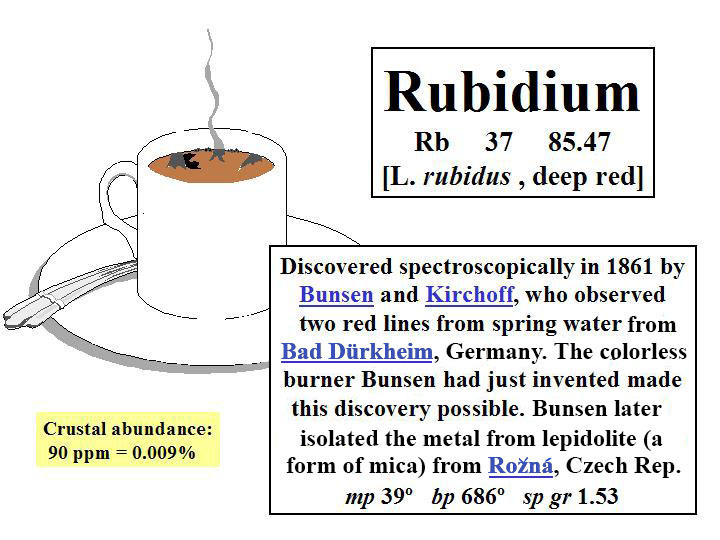
Rubidium (Rb) atomic number 37. Icon is a cup of coffee.  Discovered spectroscopically by Bunsen and Kirchoff as two red lines; the colorless burner that Bunsen had just developed made this possible; Bunsen later isolated the metal Bunsen Kirchoff Bad Durkheim

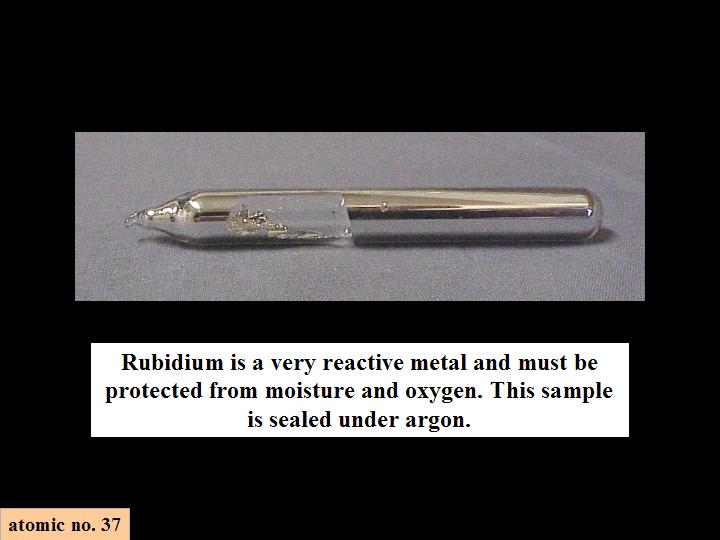
Elemental rubidium is a very reactive metal and must be stored in a sealed container under argon Elemental rubidium in a seal vial

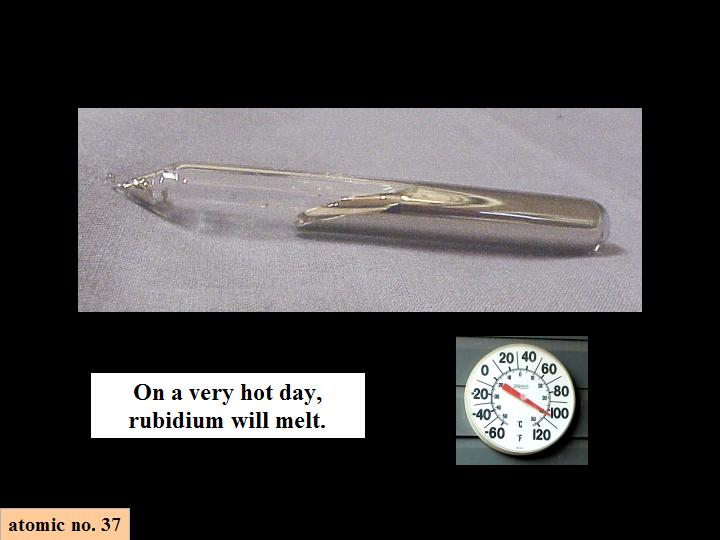
On a very hot day, rubidium will melt Elemental rubudium as a liquid Thermometer showing 40C

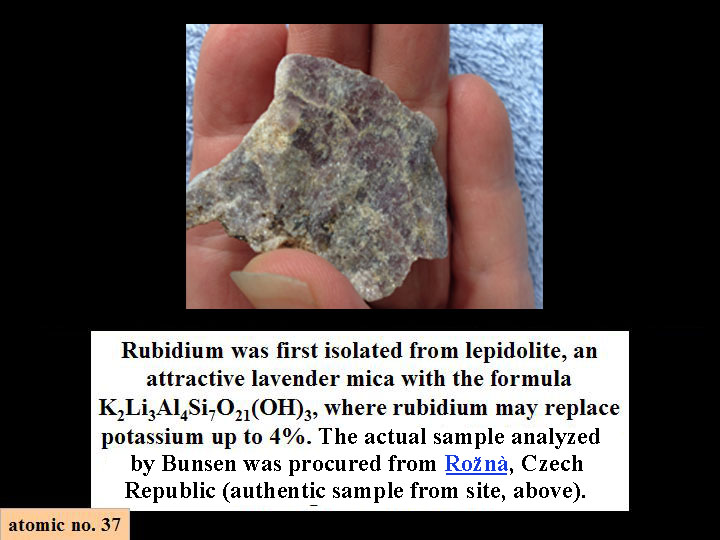
Rubidium was first isolated from lepidolite, from a sample Bunsen obtained from the Czech Republic Rozna Lepidolite


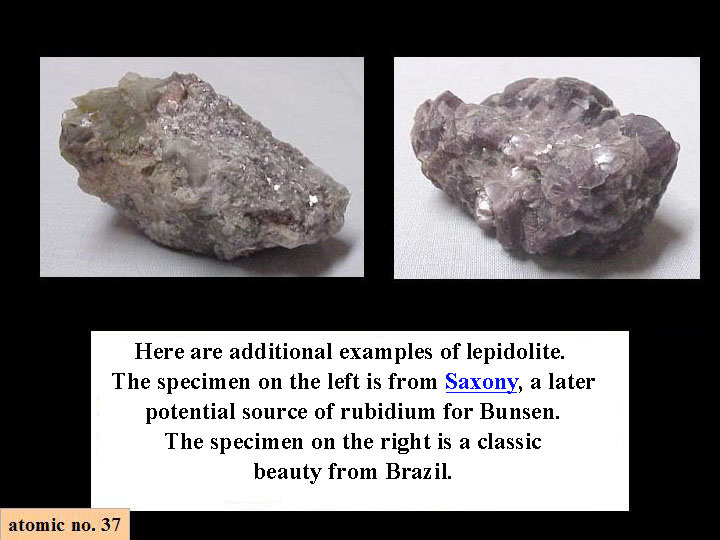
Additional samples of lepidolite from Saxony and Brazil Saxony Lepidolite sample Lepidoite sample


Special Presentation on the Spectral Analysis of the Elements

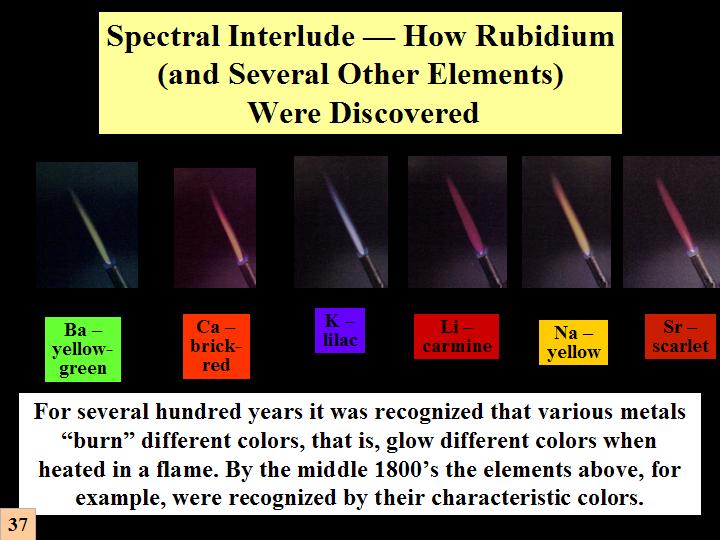
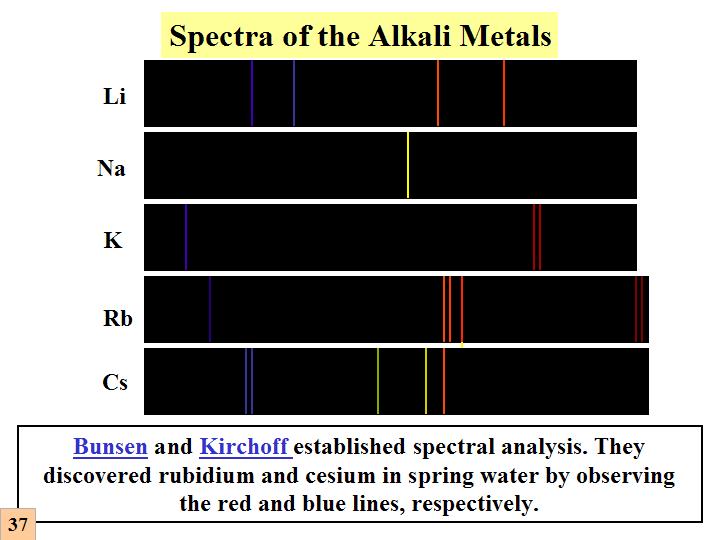
Spectral Interlude - How several elements were discovered.  For several hundred years it was recognized that various metals glow different colors when heated in a flame

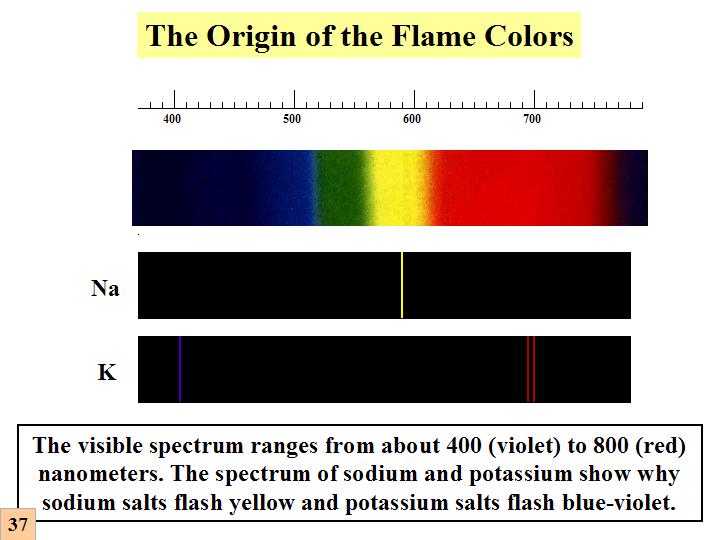
Humans can see violet to red.  Sodium flashes yellow and potassium flashes red.

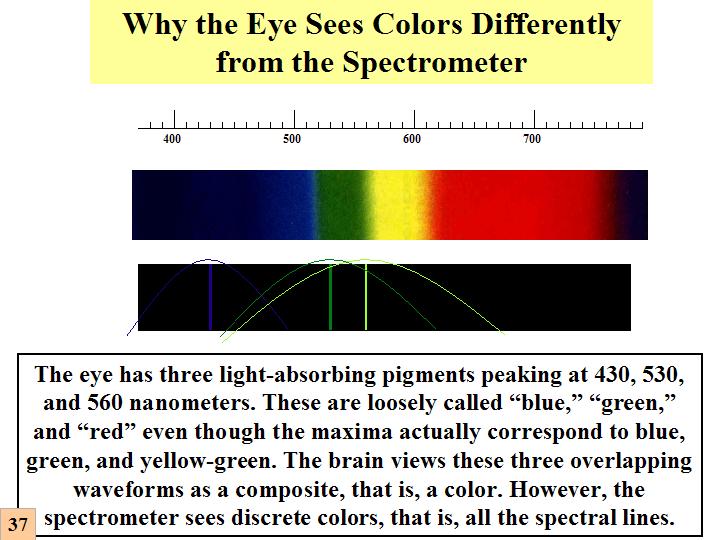
Eyes see differently than the spectrophotometer because we have rods and cones and these absorb differentially and the spectrophotometer "sees" across the whole range equally

Bunsen and Kirchoff established spectral analysis and discovered rubidium and cesium from spring water by observing the red and blue lines, respectively Bunsen Kirchoff

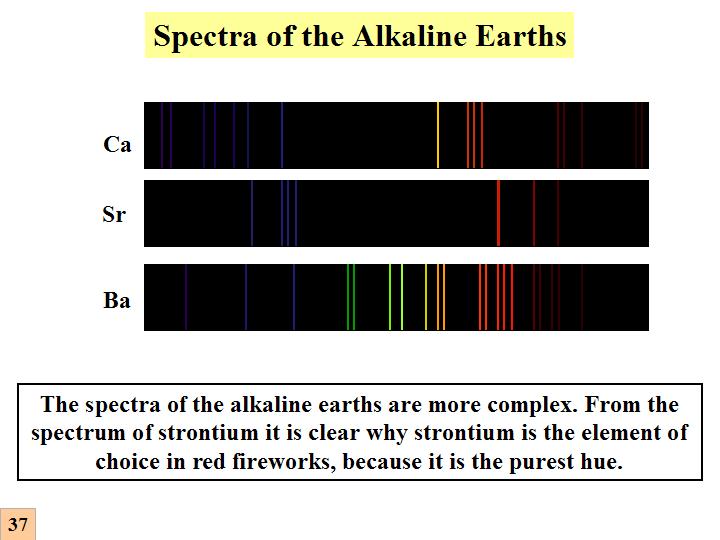
The spectra of the alkaline earths is much more complicated.  Strontium has a bright red line and is used as the red in fireworks

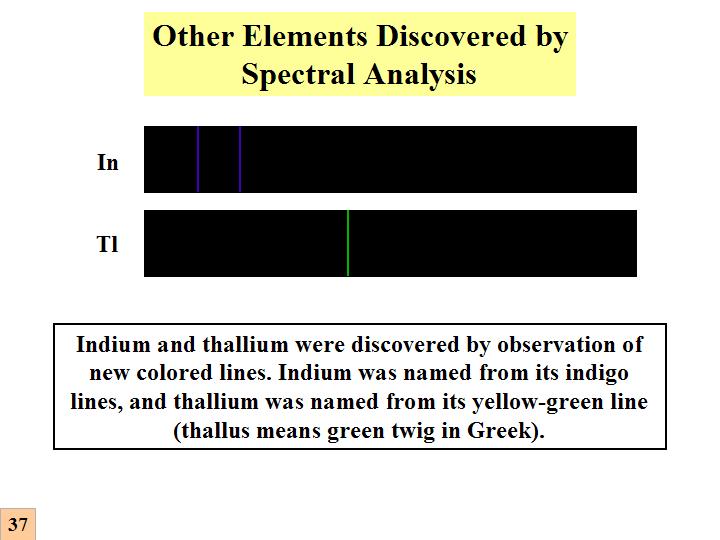
Indium was discovered by its two indigo lines and thallium was discovered by its single yellow-green line

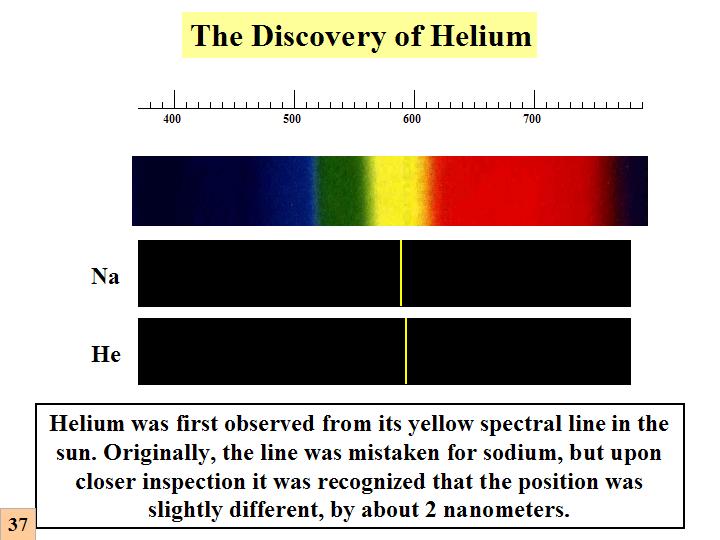
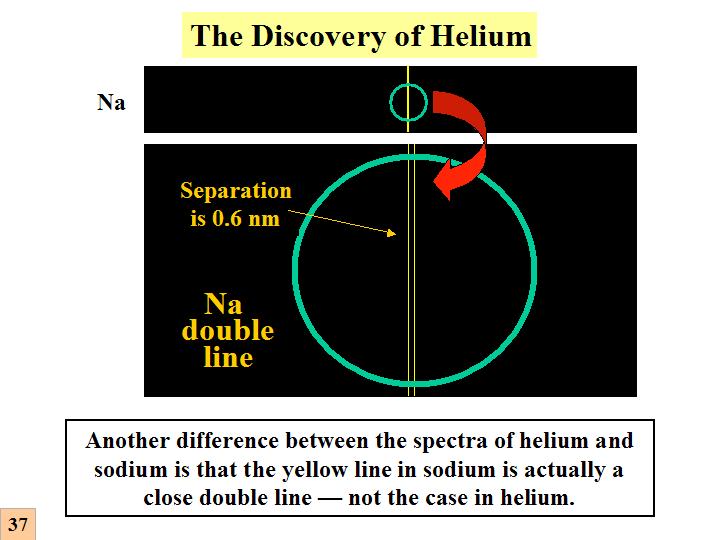
Helium was discovered from its yellow spectral line that has a slighlty different wavelength than the one for sodium

The line in sodium is actually a double line separated by 0.6nm as well, showing another difference between helium and sodium


Copyright © 2018, Dr. James L. Marshall and Virginia R. Marshall
All Rights Reserved.


Back to top